
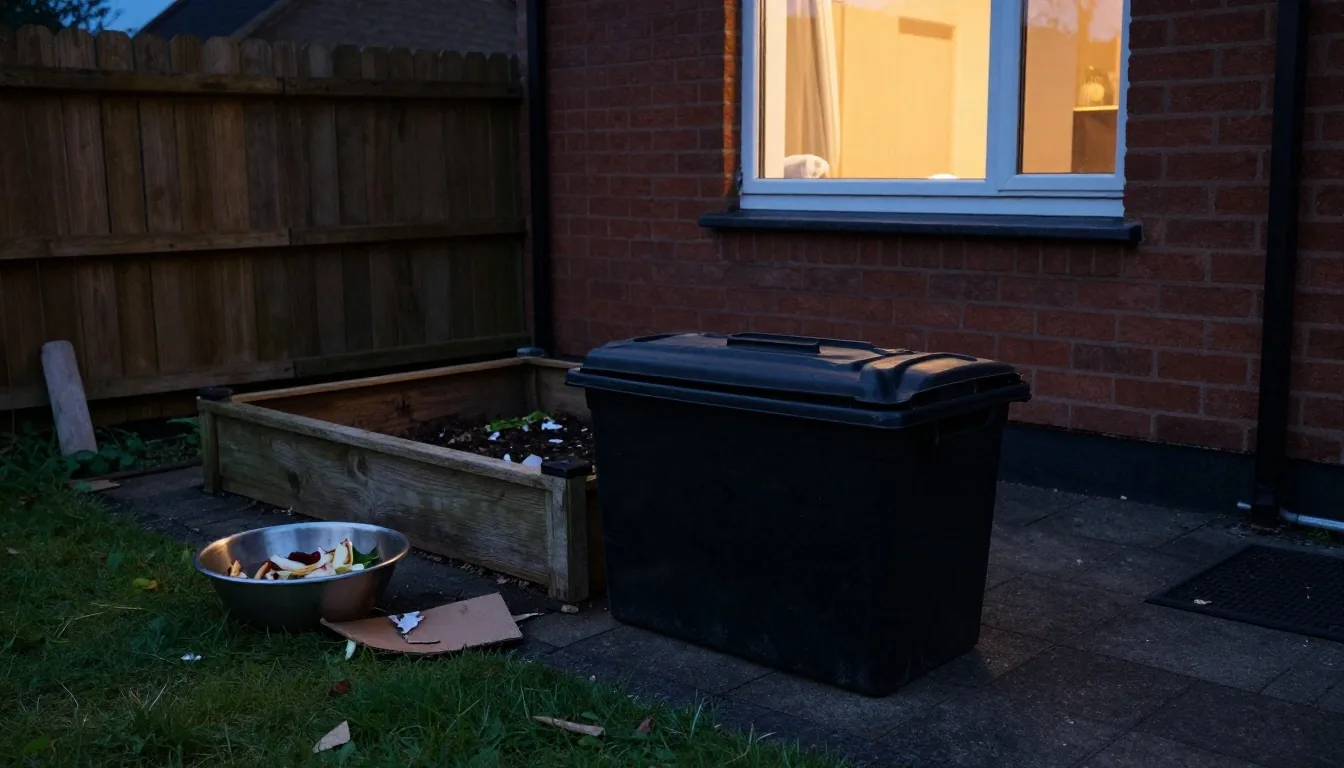
How to compost food scraps at home
Composting turns kitchen scraps into something useful instead of sending them to landfill. What suits you depends on whether you have outdoor space — and on how much garden waste you already have.
Why food scraps matter
Food waste is the heaviest part of most UK household bins. In landfill it breaks down without oxygen and produces methane, so the same potato peel you would have forgotten about in a bin goes on to do something worse out of sight. Diverting scraps cuts your bin volume and, in most kitchens, cuts the smell too — a full bag of wet food sitting for a week is what makes a wheelie bin unpleasant in summer.
Many UK councils now collect food waste separately, and those collections take a wider range than a home compost bin — cooked leftovers, meat, fish and dairy usually included. If collection is available where you live, use it alongside home composting rather than instead of it. Your compost bin handles the peelings and tea bags; the caddy handles everything else. Between the two, very little organic waste needs to go in the general rubbish.
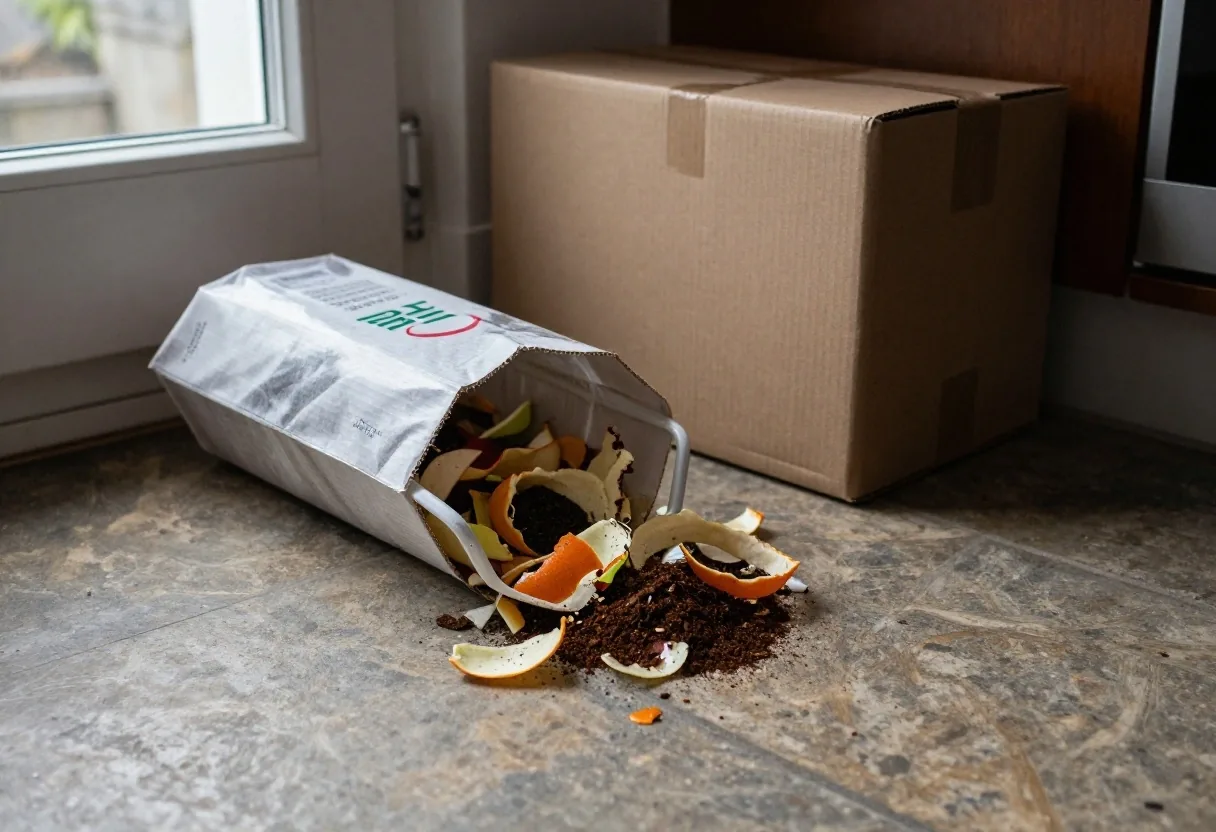
Peelings, tea bags and coffee grounds are the easy half — the caddy covers the rest.
Choosing a bin or heap
Pick based on the space you actually have and how much garden waste comes with it. A household with a lawn and a hedge has a very different problem from a flat with a balcony and a fruit bowl.
Plastic dalek bin
The cone-shaped bin sold in most garden centres. It keeps rain out, holds its heat better than an open heap, and sits neatly on a paved corner. Add scraps through the hatch and garden clippings through the lifted lid. It handles a household's peelings comfortably; it will struggle if you also want to compost a full hedge trim.
Open heap or bay
Works if you have a garden corner you don't mind giving up, and you are willing to turn it now and then with a fork. Free to build from pallets or a bought bay, and it takes bulk material a dalek cannot. Slower in winter and more visible from the kitchen window.
Wormery or bokashi bin
A wormery fits on a balcony and takes kitchen scraps without any garden waste at all, producing a liquid feed you dilute for pots. A bokashi bin is a sealed bucket that ferments everything, including meat and dairy, but its output needs a second stage — buried in a bed or added to a compost bin — before it becomes soil. Both are small, sealed and suited to flats. A wormery wants a frost-free spot; a bokashi bin is happiest out of direct sun.
- Dalek bin — needs a small garden, takes garden waste, slow in winter.
- Open heap — needs space and turning, takes bulk, cheapest to start.
- Wormery — needs no garden, no garden waste, gives liquid feed.
- Bokashi — takes meat and dairy, but needs a second stage to finish.
What you can compost at home
The list is shorter than most people expect, and understanding the two columns is what stops a bin going wrong.
Tear or chop larger items so they break down faster. A whole cabbage stalk will sit in the pile for months; the same stalk cut into strips disappears in weeks.
Goes in
- Vegetable and fruit peelings, cores and leaves
- Tea bags and loose tea leaves
- Coffee grounds and paper filters
- Crushed eggshells
- Garden clippings, deadheads and soft prunings
- Plain paper and cardboard with no glossy coating
Leave out
- Meat, fish and bones
- Dairy, including cheese and yoghurt
- Cooked or oily food
- Dog and cat waste, and used cat litter
- Glossy card, coated cartons and receipts
- Perennial weeds and diseased plant material
Everything in the right-hand column attracts pests or smells in a home bin, and the items in the left-hand column are what most kitchens throw away by weight. If your council collects food waste, that collection is the place for the right-hand list.
The greens and browns balance
Compost needs a mix of soft green material and dry brown material. Aim for roughly equal parts by volume, then turn it now and then to let air through. If it smells, you already know which way the balance has tipped — add browns and mix.
Greens
Kitchen scraps, grass cuttings, fresh plant trimmings, tea leaves. Nitrogen-rich and wet. Too many and the bin goes slimy, heavy and sour.
Browns
Torn cardboard, egg boxes, dry leaves, twigs, shredded paper, sawdust from untreated wood. Carbon-rich and dry. Too many and the pile sits cold and does nothing for months.
Keep a small lidded tub of torn cardboard next to the bin. Every time you tip in a bowl of peelings, add a handful of browns on top and give the pile a quick stir with a fork. That single habit prevents most of the problems below.
Using the finished compost
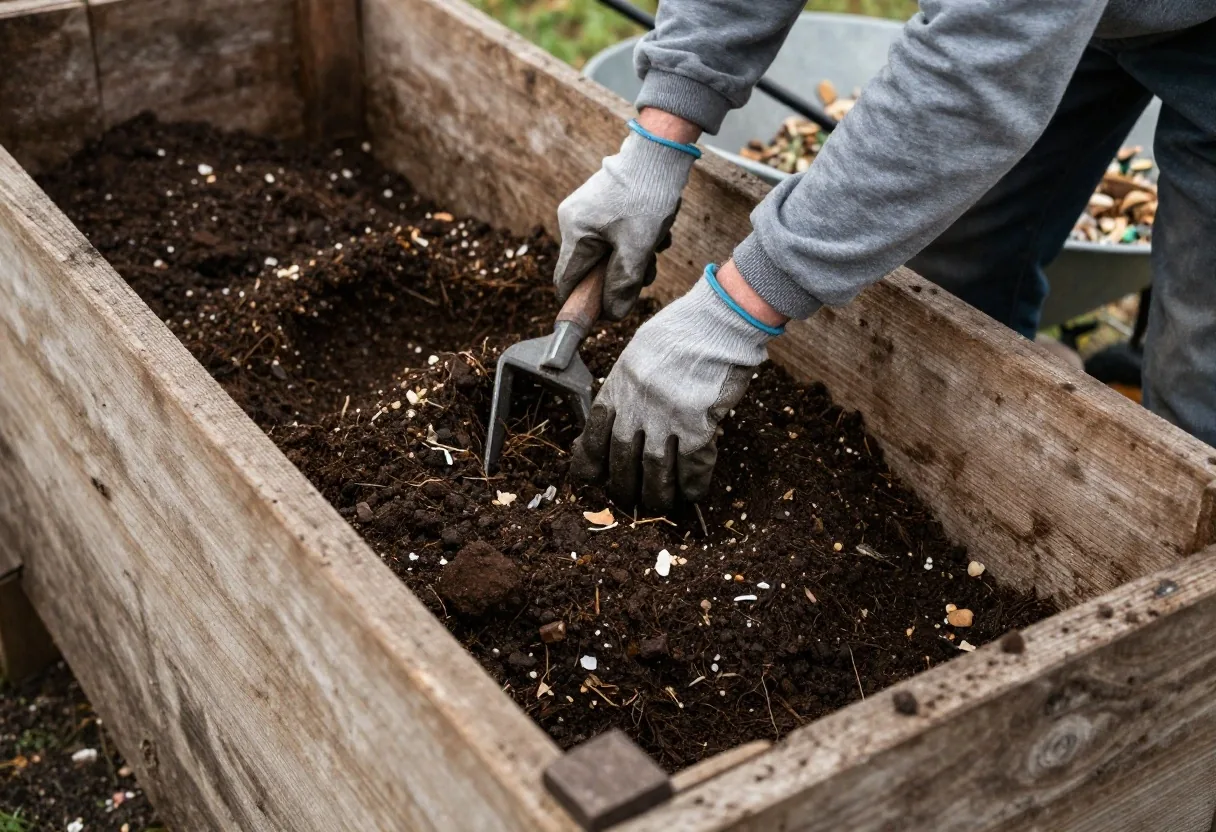
Finished compost is dark, crumbly and smells earthy — like a forest floor after rain, not like a bin. It takes anywhere from a few months to a year depending on the bin, the balance and the season. A dalek in a warm summer can be ready by autumn; an open heap started in November may not be ready until the following summer.
Sieve out anything unfinished — eggshell fragments, twiggy bits, whole avocado stones — and put it back in the bin to carry on. Use what is ready as a soil improver dug into beds, as a mulch spread around shrubs, or mixed into potting compost for containers. On beds growing root vegetables, wait until the compost is fully finished before spreading it, since partly broken-down material can still be active around the roots.
Common problems and fixes
None of these are failures. They are balance issues, and each one has a fix that takes a few minutes.
They mean food scraps are sitting exposed at the top of the pile. Bury each new addition under the surface, or cover it with a layer of browns. A lid or a piece of old carpet on top helps too.
Too many greens and not enough air. Mix in torn cardboard or dry leaves, turn the pile to open it up, and give it a few days before adding anything wet again.
A pile slows down over winter and that is normal. Leave it be, keep adding browns, and it will pick up again as the weather warms. Turning it in spring speeds the restart.
This usually means the pile has gone anaerobic — starved of air and working without oxygen. Turn it thoroughly with a fork to open it up, add a generous layer of dry browns, and leave the lid ajar for a day or two. If the smell is sharp and sour rather than earthy, adding a little garden soil can help reintroduce the microbes that restart a healthy heap.
Wormeries and bokashi for small spaces
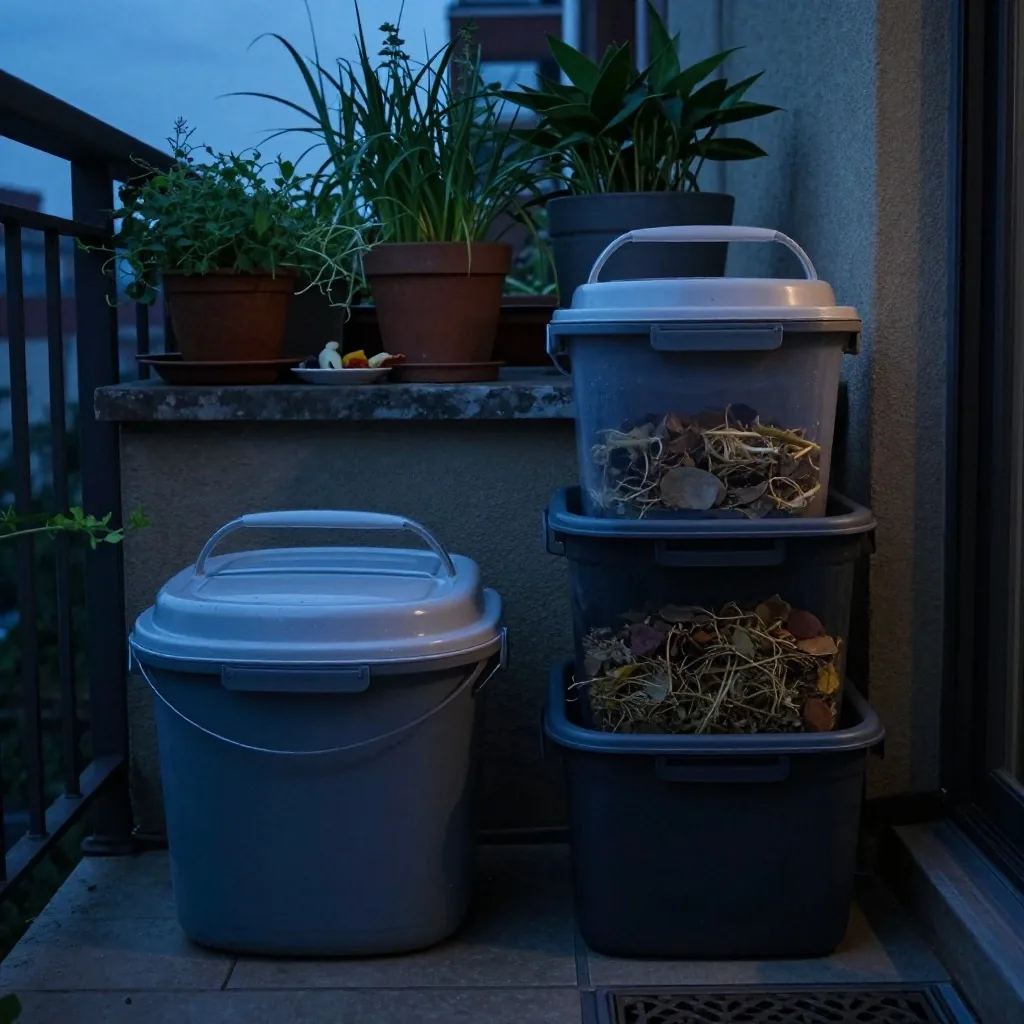
No garden is not a reason to give up on composting food scraps at home. Both a wormery and a bokashi bin fit on a balcony, in a shed, or under a sink, and both are sealed, so neither attracts flies.
A wormery uses worms to break down kitchen scraps and produces liquid feed as a bonus. It handles most vegetable scraps and small amounts of cooked food, but too much citrus or onion in one go will send the worms looking for somewhere else. Drain the liquid every week or two and dilute it for pots.
A bokashi bin ferments everything, including meat and dairy, in a sealed bucket with a bran inoculant. It does not produce compost on its own — the output needs burying in a bed, or adding to a compost bin, before it finishes into soil. Treat it as the first stage of the process, not the last.
Composting questions we hear most
Can I compost cooked food?
Not in a standard garden bin. Cooked food, oil and dairy attract pests and smell as they break down. A bokashi bin handles them, and so does your council's food waste collection if you have one. Use those routes for the cooked items and keep the open bin for raw peelings.
How long does compost take?
Anywhere from a few months to a year. A warm, balanced pile turned regularly works fastest. A cold pile through winter will sit there doing very little, which is normal and does not mean it has failed.
Do I need to buy a starter kit?
You can start with a dalek bin and a fork. If you want a tidier kit, a small caddy for the kitchen and a tub of torn cardboard next to it cover most of it. There is no special equipment that makes a heap work — the balance and the air do that.
Will it attract rats or foxes?
A closed bin with raw vegetable scraps and no exposed cooked food is not a draw for rats. Bury new scraps into the pile, keep the lid on, and avoid adding meat, fish or oily food to an open heap. If foxes are regular visitors, an open heap is more exposed than a dalek — another reason to choose a sealed bin in a city garden.
Can I compost tea bags and coffee pods?
Loose tea leaves and coffee grounds break down readily. Many tea bags contain a small amount of plastic in the sealed edge, so check the box or tear the bag and empty the leaves into the bin. Capsules need checking individually — most are not compostable and should stay out.
Keep going after the bin is set up
Composting is one habit in a wider low waste home guide. If you want to keep chipping away at the rest of the kitchen — the storage jars, the wraps, the shopping list — the pages below pick up where this one leaves off.
Ask about composting
If you are stuck on a bin that smells, or you are weighing up a wormery against a bokashi bin for a flat, send us a note and we will point you at the right page or the right method. Rethink & Reuse is an editorial resource for UK households — practical beginner guides, kitchen swaps, upcycling projects and sustainable shopping advice, all written for people starting from where they actually are.
- Rethink & Reuse, 42 Bramley Road, London, N14 4HR
- +44 20 7946 0731
- [email protected]
- Monday to Friday, 9:00 AM – 6:00 PM
We reply to emails during working hours. Questions about a specific bin or method are welcome.