
Upcycling projects
Upcycling projects using things you already own
Upcycling is keeping an item in use by changing what it does. These beginner projects need no power tools, no workshop and no shopping trip — start with what is already in your bin or cupboard.
Upcycling versus recycling
Recycling breaks an item down and makes something new from the material, which uses energy and often loses quality. Upcycling keeps the item whole and gives it a new job, so no processing is needed. Both beat landfill, but upcycling comes first because it saves more. A glass jar that becomes a storage container never enters the recycling stream at all.
That difference matters when you are planning a low waste home: the questions to ask are whether the item still works, whether it can work in a different role, and whether the answer costs you a trip to the shops.
Two routes, one bin
- Item stays whole and keeps its material
- No processing, no transport to a plant
- Takes an evening, not a collection day
- The jar, tin or shirt you already own
- The item is broken down into raw material
- Energy goes into the process
- Quality usually drops each round
- Still better than sending it to landfill
Sort with both routes in mind: upcycle what still works, recycle what genuinely does not.
Glass first
How to upcycle glass jars
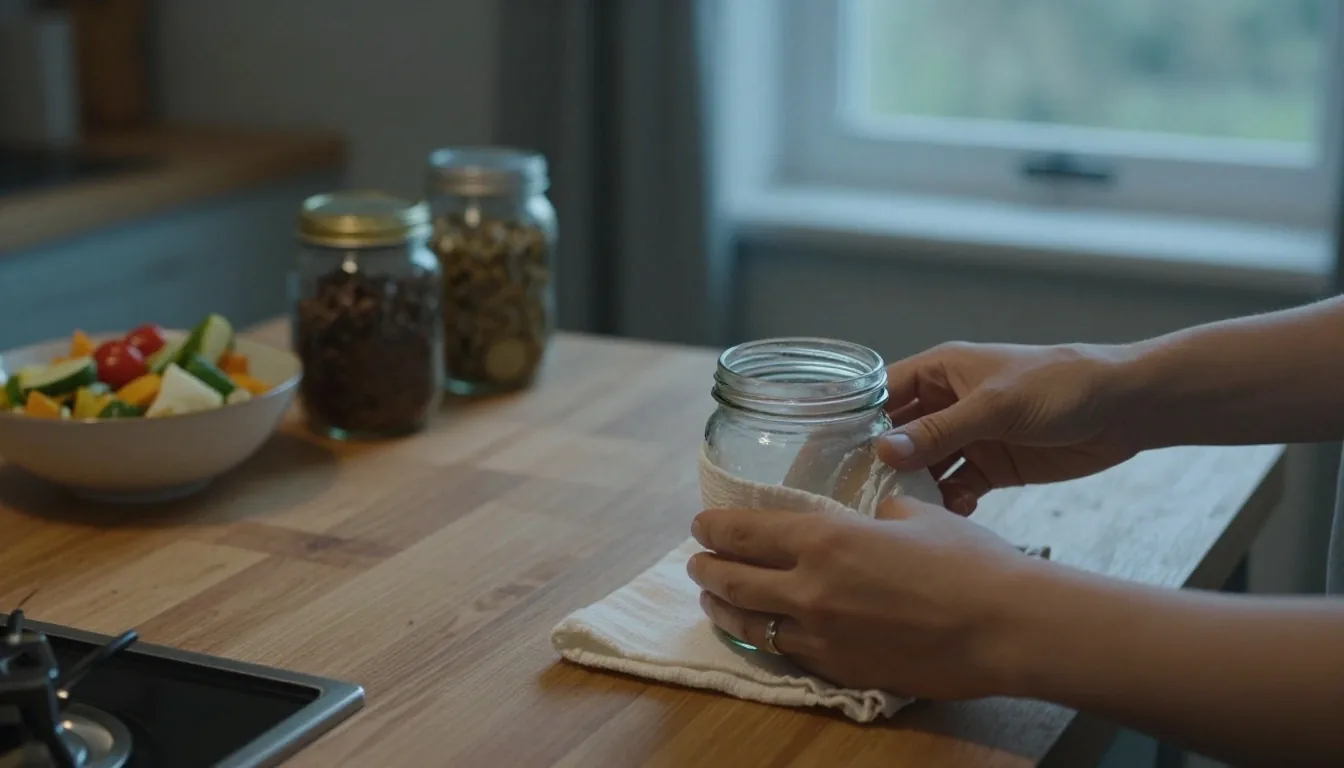
Wash jars in hot soapy water and dry them fully before storing anything dry. Sticky labels lift off with warm water and a scrape, or a rub of oil for stubborn glue. Lids from sauce jars often rust; swap them for a cork or a cloth cover if that matters. Do not reuse jars that held paint, chemicals or anything non-food for food storage. Jam, coffee and sauce jars are fine once clean.
Do this on a drying rack overnight before you fill anything. A trace of moisture is the usual reason a jar of rice or seeds goes musty in a fortnight.
Good candidates
- Jam and marmalade jars, wide enough for a hand
- Coffee and sauce jars with sound lids
- Small spice jars, once the label soak is done
Keep out of the kitchen
Anything that held paint, solvent, pest treatment or garden chemicals stays out of food storage, however well it is washed.
Getting the paper and glue off
Soak the jar in warm water for ten minutes so the paper softens, then peel and scrape with the back of a knife. Leftover glue gives way to a few drops of cooking oil rubbed in with a cloth, then a second hot wash so nothing oily stays behind.
Before anything dry goes in
Air-dry upside down on a rack so water does not sit in the base, then leave the lid off for an hour. Flour, rice and seeds keep far longer in a jar that was genuinely dry.
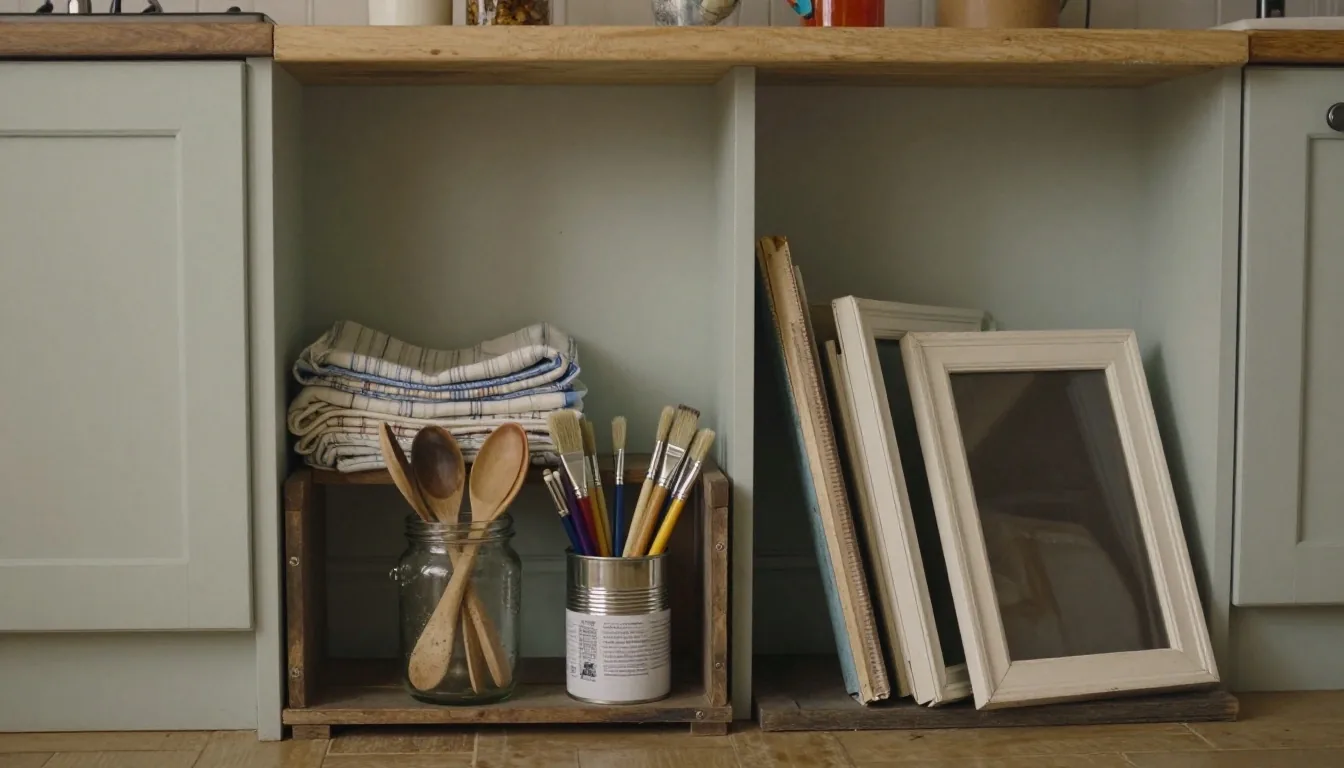
Small rooms keep the best candidates
Look at what already has the shape you need. Decorating is optional, and often makes the result look busier rather than better.
Jars around the home
Once a jar is clean and dry it stops being packaging and starts being storage. None of these need decorating, but a coat of paint on the lid hides the branding if you prefer.
Pens, buttons, screws, hair ties
A jar with a lid keeps small things visible instead of loose in a drawer.
A vase, once you check it will not tip
A larger jar on a wide base holds a few stems without needing a weight inside.
Small jars, wax lifted with hot water
Sit the jar on a saucer, and pour hot water in once the candle is spent to release the wax.
A cloth cover and a rubber band
Holds overnight oats or seeds, and works as plastic free food storage for a packed lunch.
Repurposing old clothes
Cotton t-shirts cut into squares make cleaning cloths that replace kitchen roll for most jobs. The hems work as hair ties or plant ties without any sewing. Denim from worn jeans becomes patch material for other repairs. Towels that have gone thin can be cut into bath mats or car cloths. Wearable clothes should go to charity or a swap first; upcycling is for items past wearing.
No sewing
T-shirt squares, hems as ties, thin towels cut to size. Scissors do all the work.
Needs a needle
Denim patches for mending jeans and elbows. Ten minutes and a basic repair stitch.
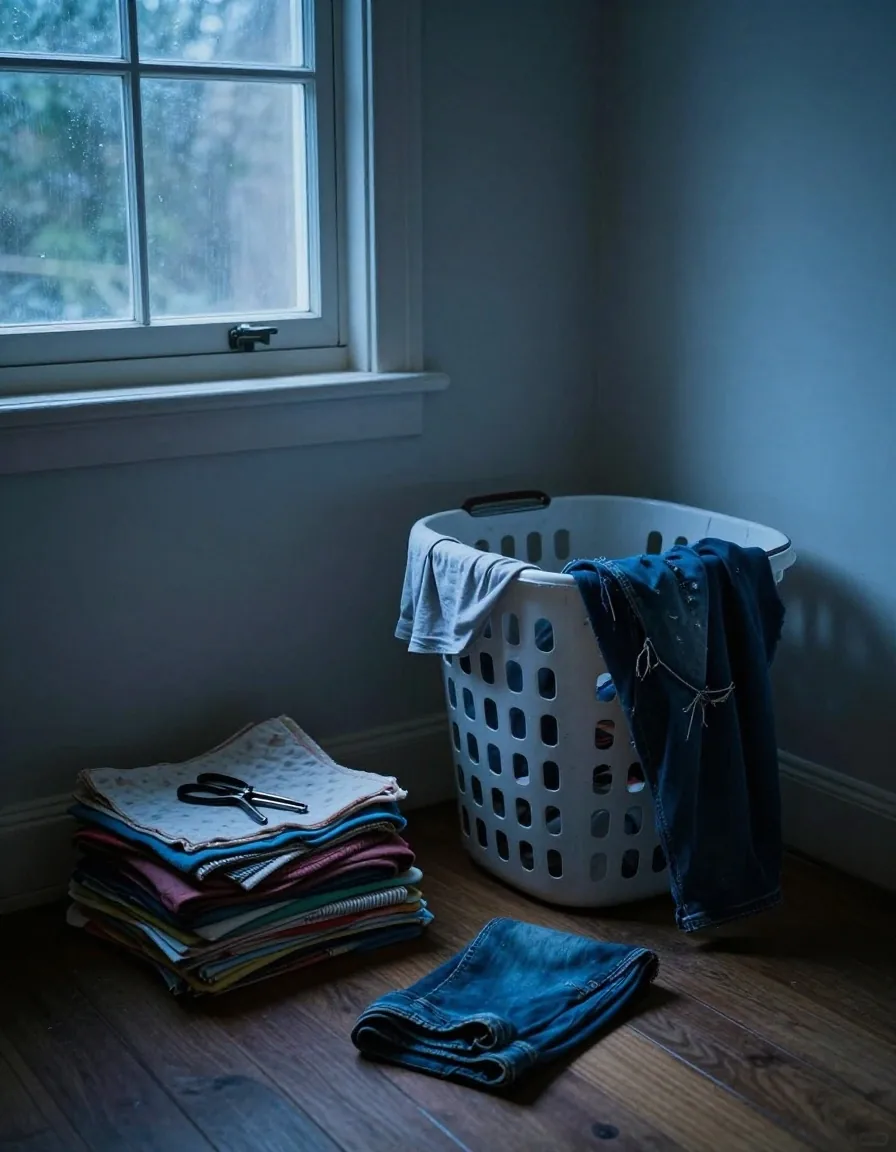
Cut once, wash often — hemmed squares last longer than raw edges.
Before you replace it
Small furniture fixes before replacement
A wobbly chair usually needs its screws tightened and a spot of wood glue. A scuffed table often needs a light sand and an oil, not a new table. Drawers that stick can be eased with candle wax on the runners. These fixes cost little and keep the item out of the bin. If the repair is beyond you, a local repair café can often help for the price of a donation.
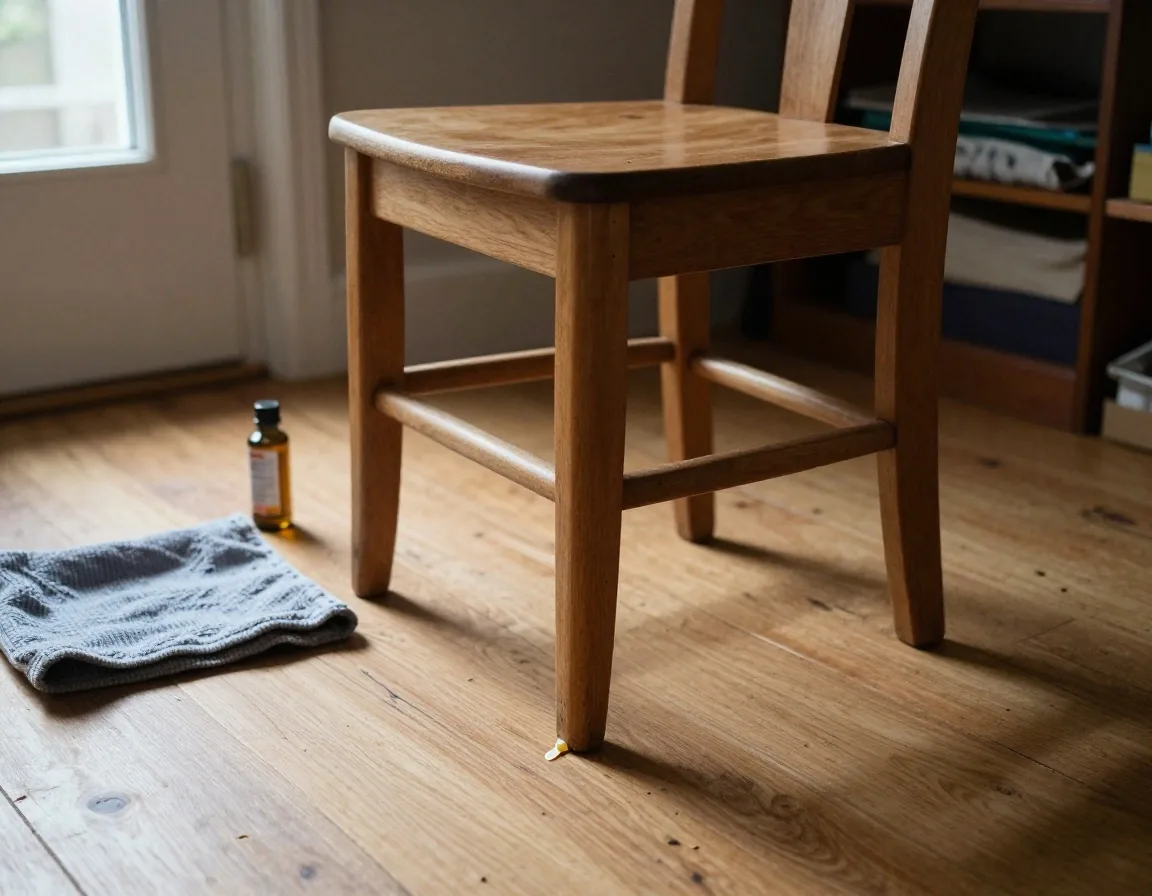
Loose joints and screws
Tighten first, then a small bead of wood glue in the joint. Wipe the squeeze-out before it dries.
Scuffs, not scratches through
Light sand along the grain, then an oil or wax matched to the finish. Test on the underside first.
Drawers that stick
Rub a candle end along the wooden runners on both sides, then work the drawer in and out a few times. It is the least expensive repair on this page and usually the fastest.
Tools and safety
Most of it is scissors and a cloth
Most of these projects need scissors, a cloth and maybe a screwdriver. For anything involving cutting metal or drilling, wear eye protection and work on a stable surface. If a project needs power tools and you do not own any, choose a different project. Borrowing a drill for one job is fine; buying one for a single build usually is not.
Questions about a project you are mid-way through? Write to us at the contact page — Monday to Friday, 9:00 AM to 6:00 PM.
Cutting cloth and card
Sharp scissors, a flat surface, and cut away from yourself. Denim needs more patience than cotton.
Metal and drilling
Eye protection, a stable bench, and no loose sleeves. Tin edges from cans are the usual cut — fold or tape them.
Borrow before buying
A drill for one shelf is a borrow, not a purchase. Tool libraries and neighbours cover most one-off jobs.
When to stop
If it needs a workshop, a jig, or two new tools, pick a simpler project. The point is to finish, not to start well.
Ideas without shopping
Look in your own bin first
Look at what fills your bin or sits unused in a cupboard before browsing project lists online. The item you already own that has no current job is the best candidate. A swap group or a local library's repair session can also spark ideas. The best upcycle is one you finish, not one you save to a board.
If you want a wider frame, the starter guide covers the habits that make up zero waste living, the kitchen swaps page deals with plastic free alternatives and food storage, and the shopping page covers how to buy in bulk without buying more than you need.
Want a hand with a project?
Tell us what you have and what you would like it to become. We read everything and reply on working days.
42 Bramley Road, London, N14 4HR · +44 20 7946 0731
Questions that come up before you start
Short answers to the things people ask most often about simple upcycling projects using reusing everyday items.
Can I use any glass jar for food storage?
Only jars that previously held food. Jars from jam, coffee, sauces, pickles and spices are fine once washed and fully dried. Anything that held paint, solvents or garden chemicals stays out of the kitchen, no matter how clean it looks.
Do I need to decorate an upcycled jar?
No. Decoration is optional and often makes the result look busier than it needs to. If the branding bothers you, a coat of paint on the lid is the smallest change that fixes it.
What is the upcycling versus recycling difference in practice?
Upcycling keeps the object and changes its job; recycling breaks the material down and makes something new. In practice: if the item still works, give it a new role. If it is broken, worn through or contaminated, recycle it.
Should wearable clothes be upcycled first?
No. Anything still wearable should go to charity or a clothes swap first — it stays in use for longer that way. Cut up only what is past wearing, stained beyond saving, or too worn to pass on.
Where can I get help if a repair is beyond me?
Local repair cafés usually help for the price of a donation, and many libraries run repair sessions. A neighbour with the right tool is often the quickest answer. If the fix would cost more than the item is worth to you, it is reasonable to let it go.
Start with one item this week
Pick one thing on your counter that has no current job, give it a new one, and that is upcycling done. The guide and kitchen pages below carry the rest of the routine when you are ready for more.