
Sustainable shopping tips
Sustainable shopping tips for everyday essentials
Most of a household's waste enters through shopping, so this page is about buying habits rather than brands. Practical, UK-specific where it matters, and honest about what is hard to avoid.
Where waste actually enters
Start with volume, not labels
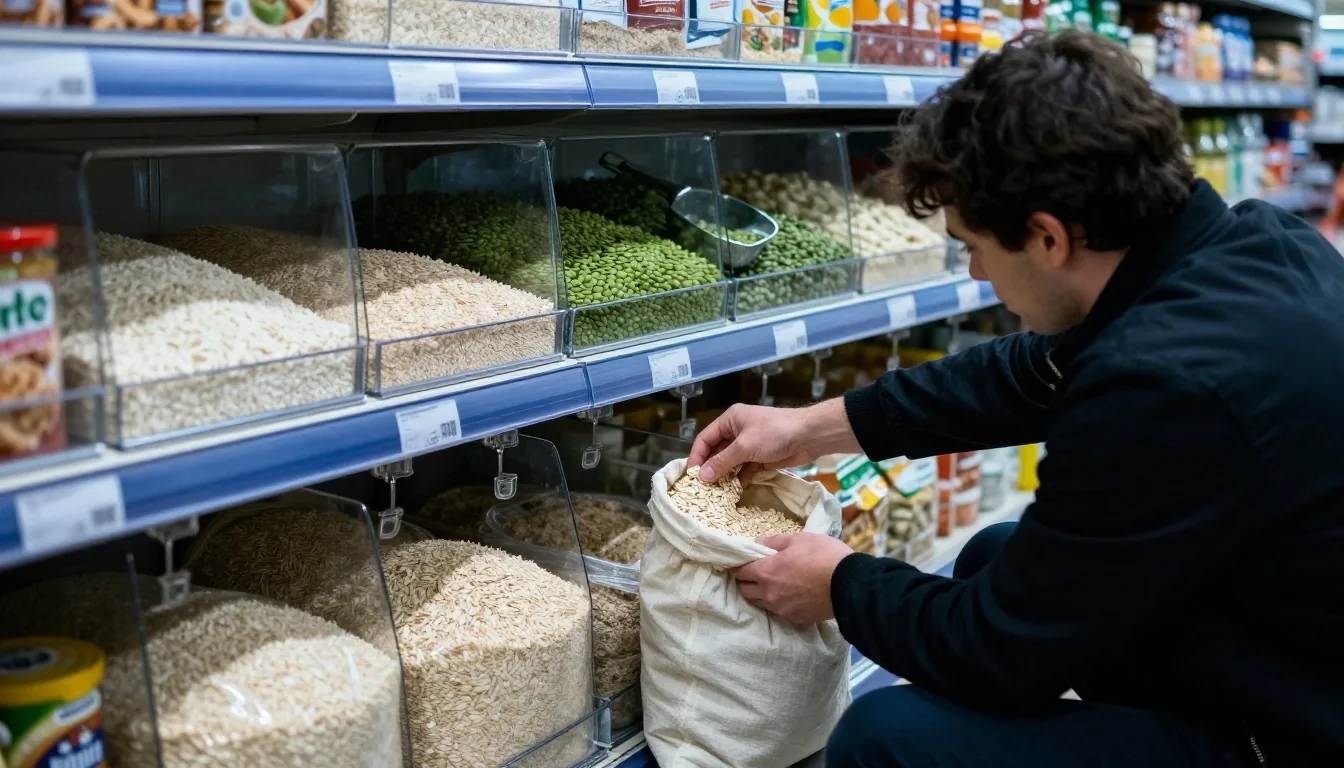
A larger bag of oats uses less packaging per portion than five small ones, even when the material is identical. That single change cuts a surprising amount of plastic without switching shops, and it is one of the easiest sustainable shopping tips to act on this week. Buy the biggest size you will genuinely use before it goes stale. For dry goods, that is often a kilo or more.
The same logic runs through a low waste home guide. Rice, pasta, flour, sugar and cereals all keep for months in a cool cupboard, so a big bag split into smaller containers at home rarely goes to waste. What changes is how often you carry packaging out to the bin.
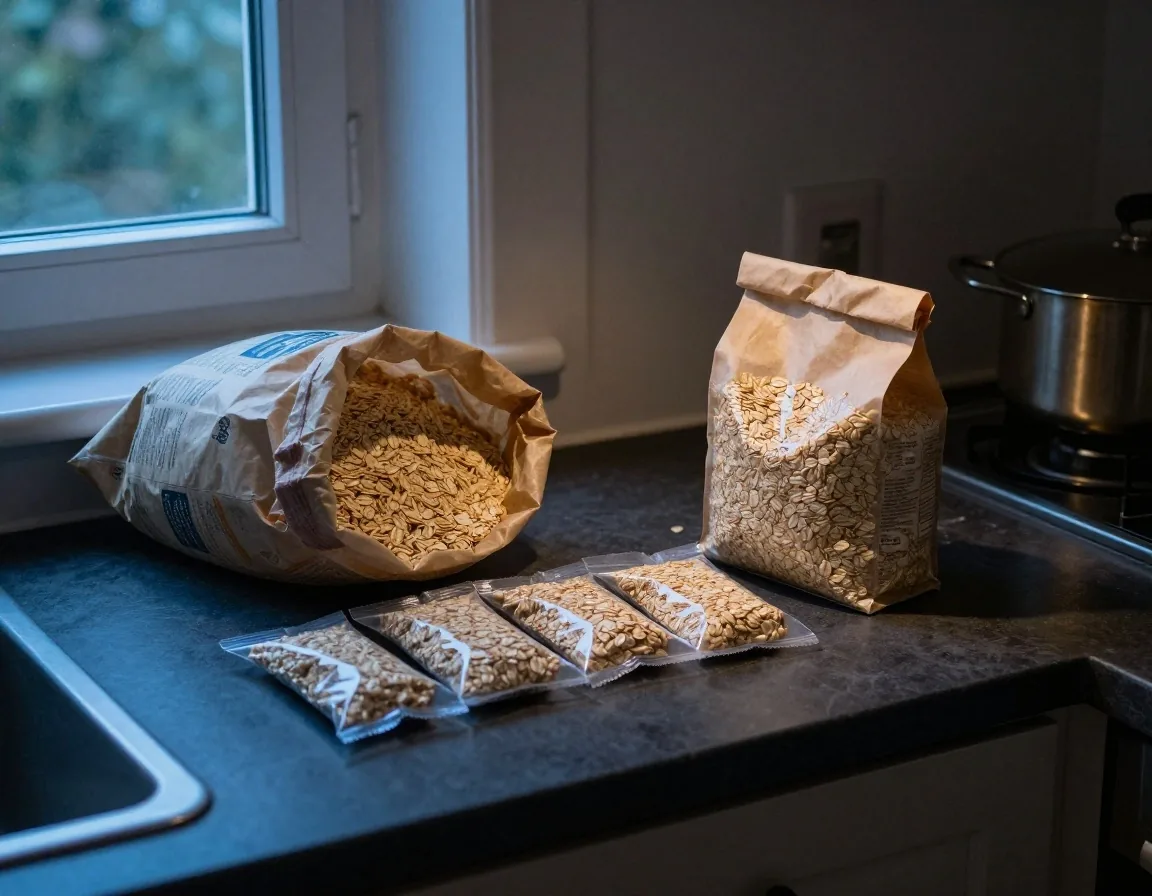
Five small bags versus one large
The size test that decides most purchases
Before you pick an item up, ask what the biggest format is that your household will finish in time. For dry staples that is often the wholesale-size bag. For fresh food it is usually the one you can eat within the week, so the fridge does less throwing away.
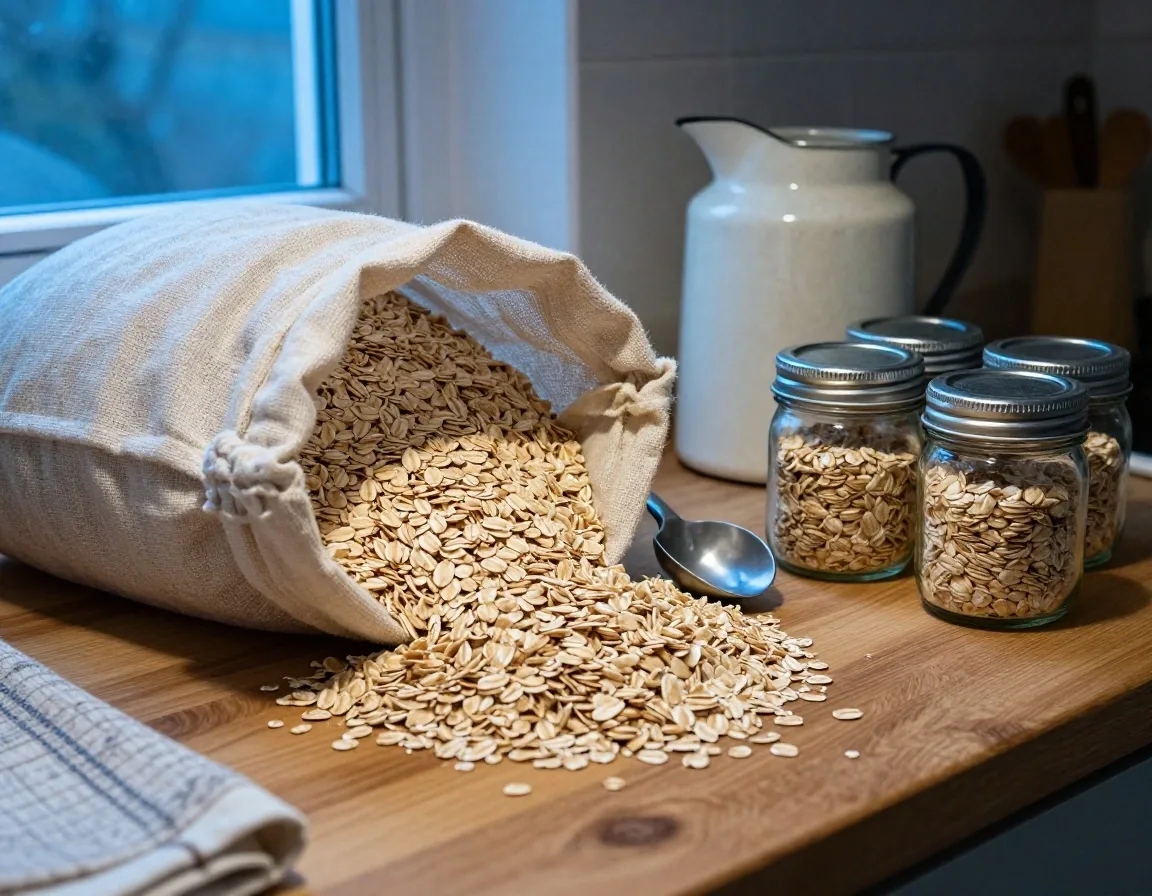
One bag, decanted the same evening
Buying more without spoiling more
Buying in bulk without waste
Learning how to buy in bulk means buying more at once, or buying loose from bins. Both reduce packaging, but bulk can backfire if food spoils before you reach it. Keep a rough inventory so you know what you already have, and check the cupboard before you shop rather than after.
- Split large bags into smaller airtight jars when you get home, so you open one container at a time.
- Keep grains, pulses and baking goods in a cool dark cupboard, away from the oven and the kettle.
- Write the decant date on the jar lid. It takes ten seconds and stops duplicates piling up.
- If your area has a refill shop, take your own containers and weigh them at the till first, before filling.
Compare before you commit
Refill shops and what to expect
Refill shops sell dry goods, cleaning liquids, and sometimes oil and vinegar loose. You bring containers, fill them, and pay by weight. Prices vary and are not always lower than supermarkets, so compare on the items you use most. Not every town has one, and that is fine; larger supermarket bags cover the same ground.
What you need
How it works in practice
What to watch for
Your own containers
Jars, tubs and bottles from home. Weigh each one empty at the till so the weight comes off your total.
Not all shops accept glass for liquids. Ask first, or keep a dedicated set of light plastic tubs for cleaning refills.
Dry goods by weight
Oats, rice, pasta, lentils, nuts and dried fruit are the usual loose staples. You scoop, or the shop fills for you.
Only buy what you will use in a few months. Loose stock has no best-before date printed on your jar.
Cleaning liquids
Washing-up liquid, laundry detergent and all-purpose cleaner are commonly refillable, usually diluted from a large drum at the till.
Compare the price per litre against the supermarket bottle you already buy. It is rarely identical.
Container return schemes
Some shops take their own jars and bottles back, wash them, and refill them for the next customer.
Ask whether returned containers are reused or simply recycled. Reuse is the part that saves material.
Swaps that hold up in a normal week
Plastic free alternatives for food
Loose fruit and vegetables usually cost the same as the pre-packed version, which makes them the simplest place to start. What follows covers the reusable items worth owning, and where they quietly stop working.
Reusable produce bags
Cloth and mesh bags replace the plastic rolls by the fruit and veg. Take three or four; mushrooms and soft herbs stay fresher in cloth than in film.
Beeswax wraps usage and care
Wraps replace cling film for cheese, half a loaf, cut veg and bowl covers. Wash them in cool water only; heat melts the wax and they stop clinging.
Glass and stainless containers
These replace takeaway boxes you would otherwise bin, and they are what plastic free food storage mostly comes down to: one container, used hundreds of times.
Larger packs when nothing fits
Where none of the reusable options work, a bigger pack still cuts plastic per portion. Reusable items beat single-use even when they are made of plastic themselves.
Toiletries, soap and cleaning
Sustainable home essentials
Cleaning products, soap and toiletries are common sources of plastic. Bar soap lasts longer than bottled hand wash and usually comes in paper, which makes it one of the quieter eco friendly living ideas. Refillable cleaning liquids cut bottle waste if a refill station is nearby. Bamboo toothbrushes are a minor improvement at best; the bigger win is using what you already have until it is done.
Buy replacements when the old one runs out, not before. For eco friendly kitchen cleaning, a refillable all-purpose liquid, a scrubbing brush with a replaceable head, and a stack of cotton cloths cover almost every surface. Store the cleaning concentrate out of direct light and dilute it as you use it.
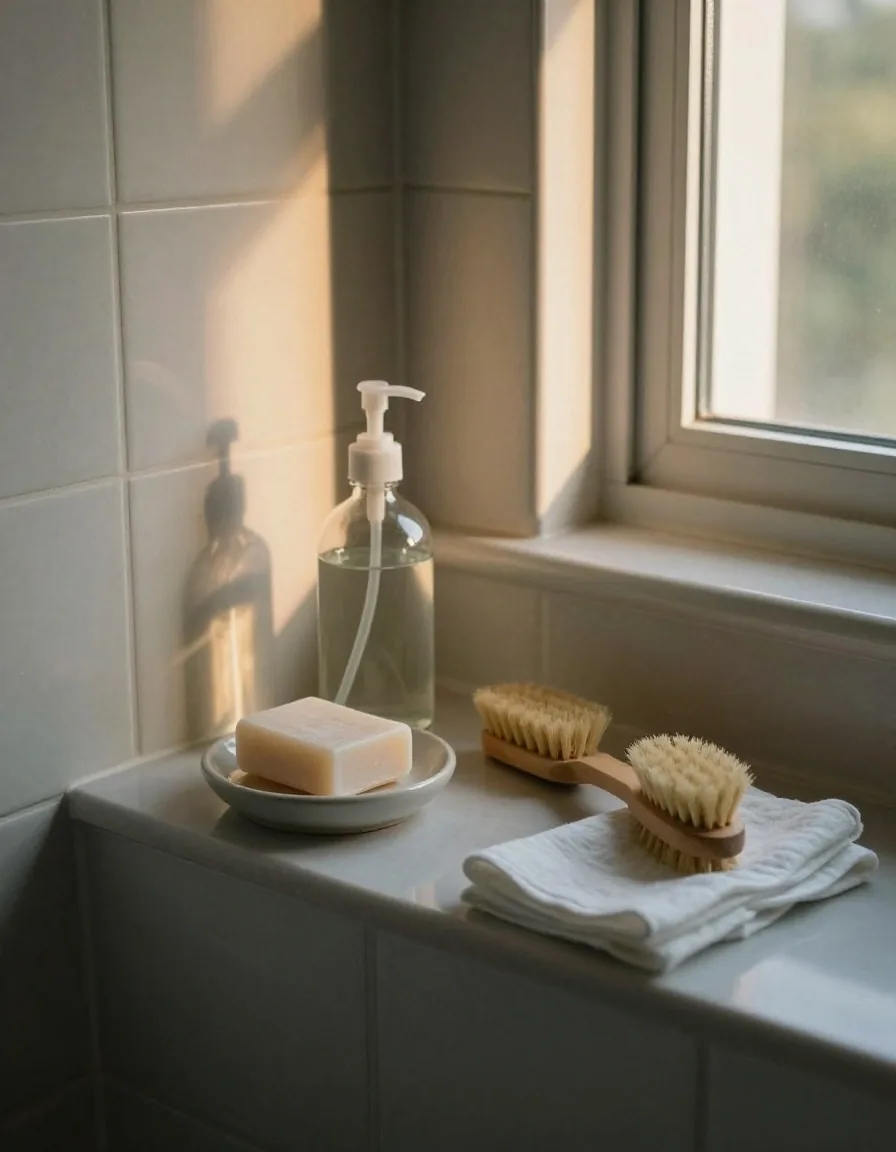
Refill bottle, bare bar, reusable cloth
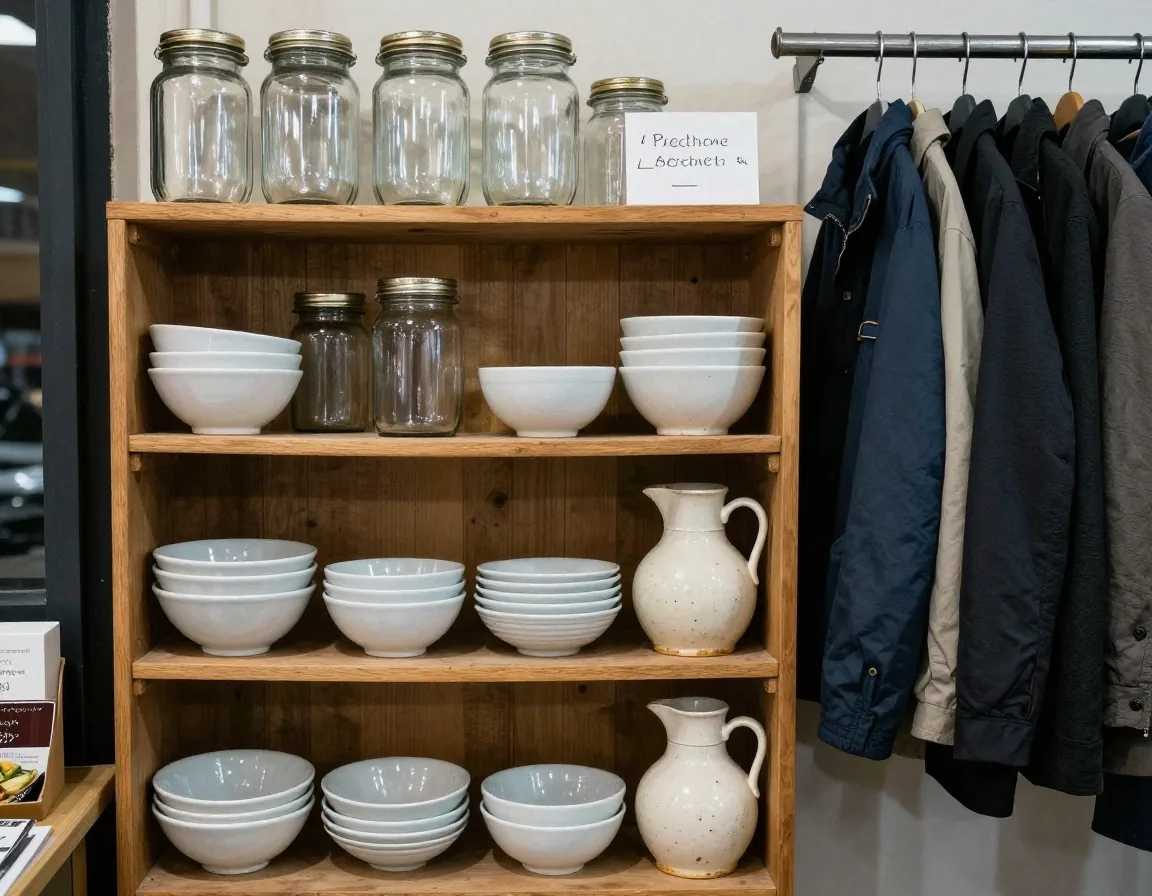
Charity-shop shelf, checked before buying
Cost and waste fall together
Secondhand first
For furniture, tools, books and clothes, secondhand usually wins on both cost and waste. Charity shops, online marketplaces and local swap groups cover most of what a home needs, and reusing everyday items this way is often faster than waiting for a delivery. Check condition before buying, especially for anything electrical.
For things you will barely use, borrowing or hiring beats buying new. A wallpaper steamer, a carpet cleaner, a drill for one shelf: the local library of things or a neighbour covers these. Repurposing old clothes follows the same rule. Wear what is there, mend the seams, and only then look for a replacement.
Reading a pack in the aisle
Reading green claims without being fooled
Words like eco, natural and green have no fixed meaning on packaging. Look instead at what the item is made of, whether it can be refilled or repaired, and how far it travelled. A single material is usually easier to recycle than a mixed one. If a claim does not say what is actually different, treat it as marketing.
Which label words are worth trusting?
Almost none on their own. A vague green word tells you the item was marketed carefully, not that it uses less material. Look for a specific statement about the material, the refill, or the repair. If the pack cannot say what changed, nothing changed.
Is one material always better than a mixed one?
For household recycling, usually yes. A single-material bottle or tray is easier to sort and process than a foil-lined carton or a plastic window glued into card. Choose the simpler material when the contents are otherwise equivalent.
Does buying local beat buying big?
It depends what moved and how. Transport is one part of the impact of an item, alongside the material and how long you keep it. Pack size and how long the item lasts usually matter more than the last few miles, so do not trade a good staple for a worse-packaged local version.
What this page will not tell you
It will not recommend specific brands, and it will not claim any purchase is waste-free. Almost everything a household buys carries some impact. The point is to reduce it, not to hit zero on every item. Buying less, buying used, and buying larger where it makes sense covers most of the ground.
Common questions before the next shop
Getting started without overhauling everything
Where should a beginner actually start?
With the items you buy most often. Pick two dry goods, buy them in the largest size you will finish, and take cloth bags for produce. That is roughly half of the plastic a typical shop brings home, and it takes one trip to set up.
Is a refill shop always cheaper?
No. Refill prices vary by item and location, and some cost more than a supermarket equivalent. Compare the three or four things you buy weekly rather than the whole shop, and refill those. Everything else can wait.
Do I need to buy a starter kit first?
No. A zero waste starter kit is mostly jars, cloths and bags you already own. Buy the one or two pieces you are genuinely missing, then let the rest of the habit build from your normal shopping list.
How does this fit with food waste at home?
They are the same problem seen from opposite ends. Buying the right amount reduces what arrives; composting food scraps at home deals with the peelings and trimmings that come anyway. Both reduce what leaves the house.
Where does upcycling fit in?
The upcycling vs recycling difference is simple: recycling breaks an item down into raw material, upcycling keeps it whole and gives it a new job. Both matter after the shop, which is why the guide on how to upcycle glass jars sits alongside this one.
What the site covers
- Zero Waste Starter Guide — the first four swaps, in order, for a beginner.
- Kitchen Swaps — storage, cleaning and the working parts of a low waste kitchen.
- Upcycling Projects — simple upcycling projects, glass jars, old clothes and upcycled home decor DIY.
- Composting at Home — what to do with food scraps once the shopping is done.
- Contact us — send a shopping question and we will answer it in plain terms.
Rethink & Reuse is an independent editorial resource for UK households. We do not sell products and we do not take payment for recommendations.
Take one habit to the next shop
Start with two dry goods in the largest size you will finish, and take cloth bags for produce. If something on this page does not fit your local shops, write to us and we will look at it properly — 42 Bramley Road, London, N14 4HR. Open Monday to Friday, 9:00 AM to 6:00 PM.