
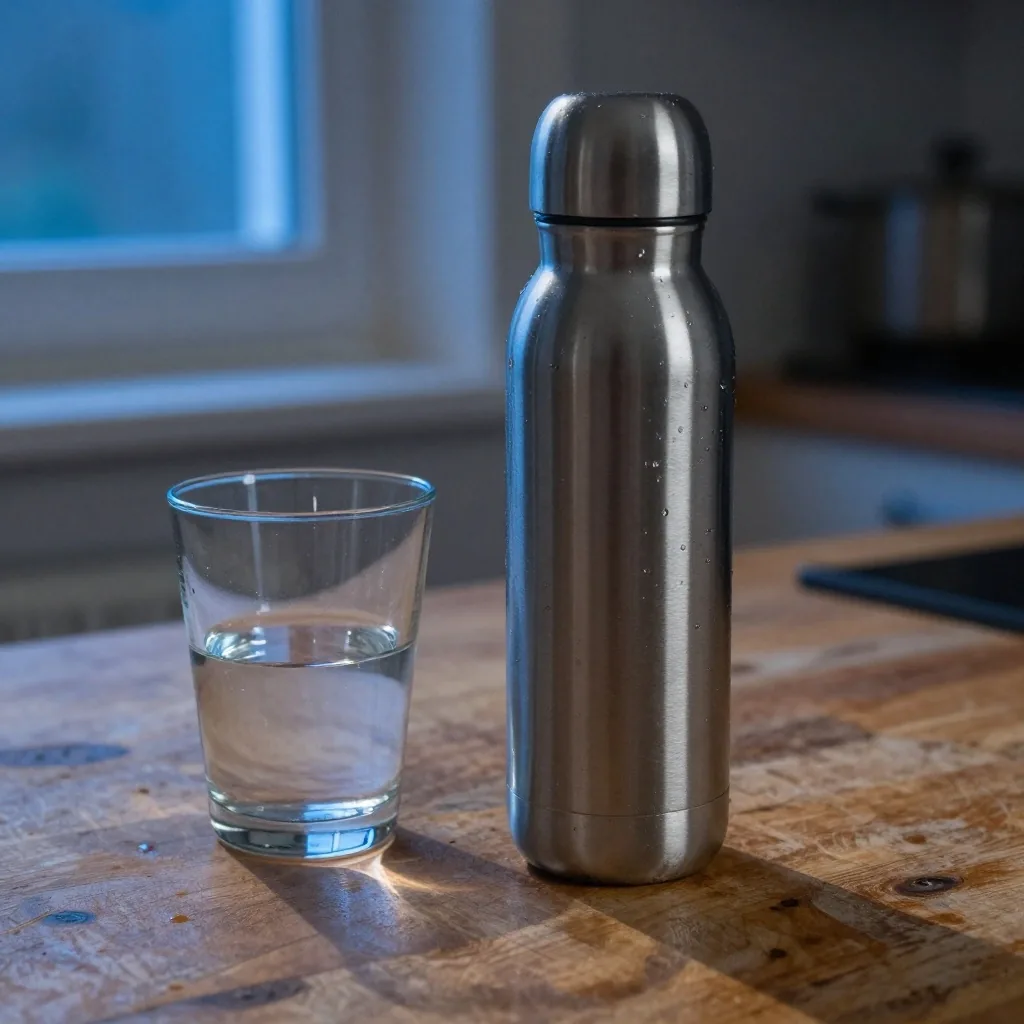
A reusable water bottle
The swap that pays back fastest because bottled water is bought by the case. Anything sturdy and easy to wash will do; the one you carry is the right one.
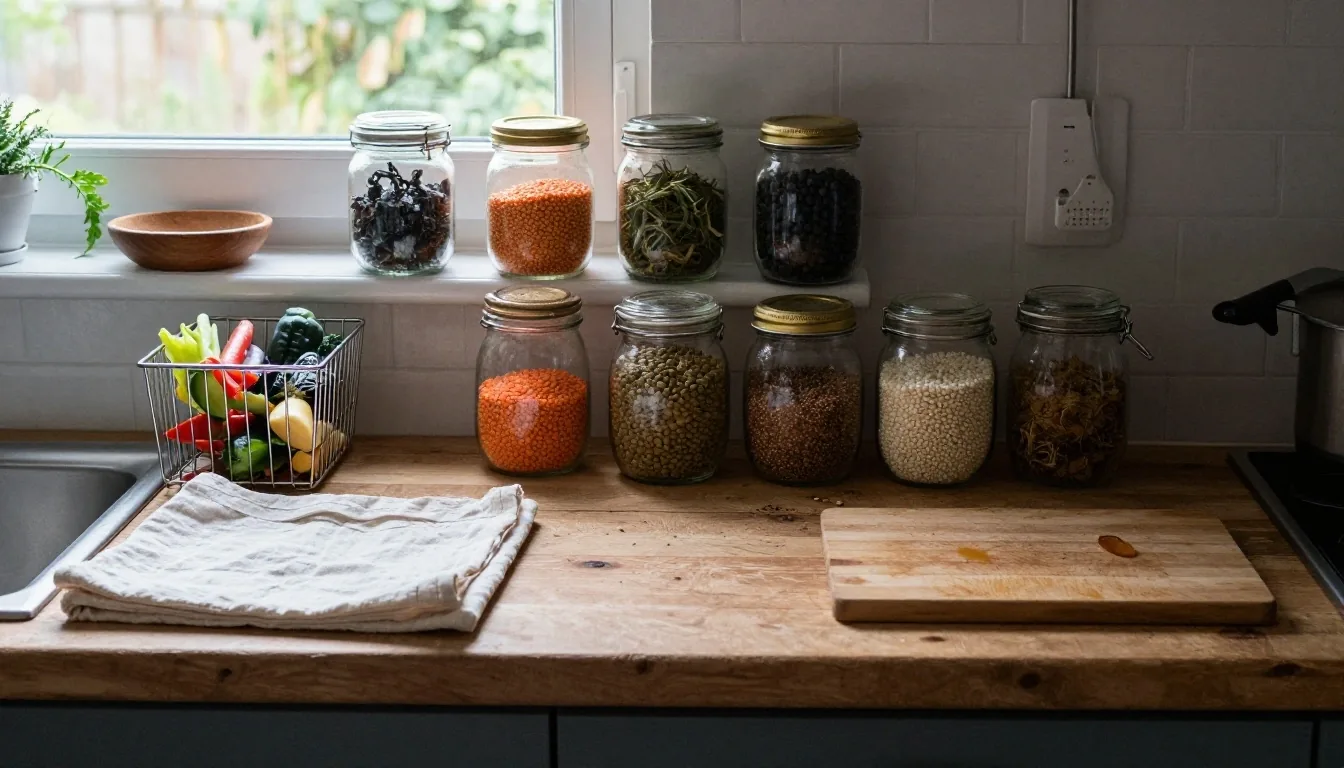
No polished cupboard tours. Just the first few moves that fit a normal week in a normal kitchen, and the order to make them in.
Rethink & Reuse is an editorial resource for UK households: beginner guides, kitchen swaps, upcycling projects and shopping advice, written by people who still forget their produce bags.
Zero waste living, as this site uses the term, means reducing what you send to landfill and reusing what you can. It does not require a specific number of matching jars, a year's worth of rubbish in a tin, or a kitchen that looks like a shop display.
The goal is narrower and more useful than a lifestyle: fewer single-use items entering your home, and more things getting a second use before they leave it. That is it. Sustainable lifestyle habits are what you keep doing in an ordinary week, not what you manage in an ideal one.
Some weeks you will do well; others you will not. Both are normal, and neither one is the point. If you want the wider picture of how this site approaches low waste at home, the rest of these guides follow the same principle: start where the waste actually is.
Look in your bin on collection day and write down what is actually in it. Almost everyone guesses wrong the first time.
For most UK households food is the heaviest and wettest part of the bin, which makes it the cheapest thing to divert. If food dominates, composting food scraps at home or a council caddy is your first move.
Film, trays and bags stack up fast and flatten down, so they hide. If packaging dominates, shopping habits are the target, not storage containers.
Lighter, but they arrive in bursts. Knowing how much you shed each year tells you whether repurposing old clothes or a repair shelf deserves attention.
A workable starter setup is smaller than the videos suggest. Four things, arranged where your hands already go. Anything more elaborate tends to sit unused, which makes it worse than nothing because it costs money and takes up space. The system should fit your kitchen, not the other way round.
A caddy or small countertop bin for food scraps, lined with paper or a compostable liner. Lidded matters more than pretty.
One or two reusable produce bags kept where you keep your keys. This is the single habit that survives best because it rides on leaving the house.
Whatever you take to be refilled lives in one place, empty and ready. Scattered containers never make it out of the house.
A box for things waiting to be fixed, cut down or given a second use. The pile is fine; the pile with no home is what ends in the bin.
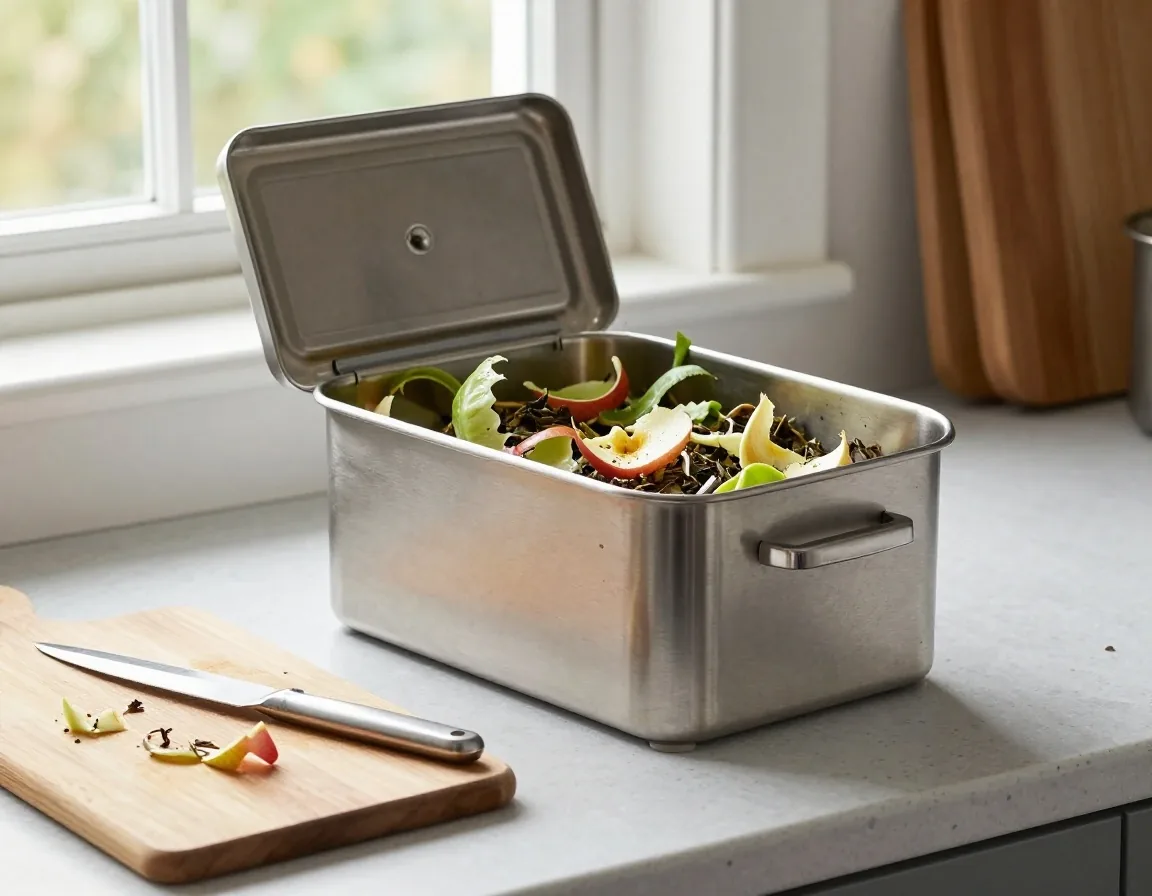
Food scraps are the heaviest and wettest part of household waste, and the easiest to divert. If your council collects food waste, use the caddy they provide or a small countertop bin lined with paper. Empty it on the same rhythm as your other bins and it stops being a chore you notice.
If you have a garden, a compost bin handles vegetable peel, tea bags, coffee grounds and eggshells. Meat, dairy and cooked food go in council collection rather than a home compost bin, and cooked leftovers are better dealt with by planning portions than by composting. The composting at home guide covers the differences in detail.
You do not need a refill shop on your street. A supermarket bulk section or a bigger bag of rice still cuts plastic per portion.
Loose produce, a supermarket bulk bin, or the bigger bag of pasta instead of the snack-size one. Take a couple of containers for anything sold loose, including cheese and olives.
Rice, oats, pasta and flour in the largest bag you will actually get through. Less film per portion, fewer trips, and it costs less per kilo.
Refill shops suit some cupboards and not others. Buy a small amount the first time, see how fast you use it, then decide what is worth a jar in the cupboard.
Take the packaged version, try again next week. One missed shop does not undo the habit, and treating it as a failure is what ends it.
Three swaps give most of the benefit, and all three replace something you buy repeatedly. That repetition is where the money and the waste reduction actually stack up. Work through these before adding anything else to the kitchen.
The swap that pays back fastest because bottled water is bought by the case. Anything sturdy and easy to wash will do; the one you carry is the right one.
A set of three or four covers loose fruit, vegetables and bread rolls. They weigh almost nothing, so they never change the price at the till. One lives with your keys.
For covering bowls and wrapping cheese if you cook often. They replace cling film and last months with basic care: cool water, mild soap, no hot dishes and no raw meat.
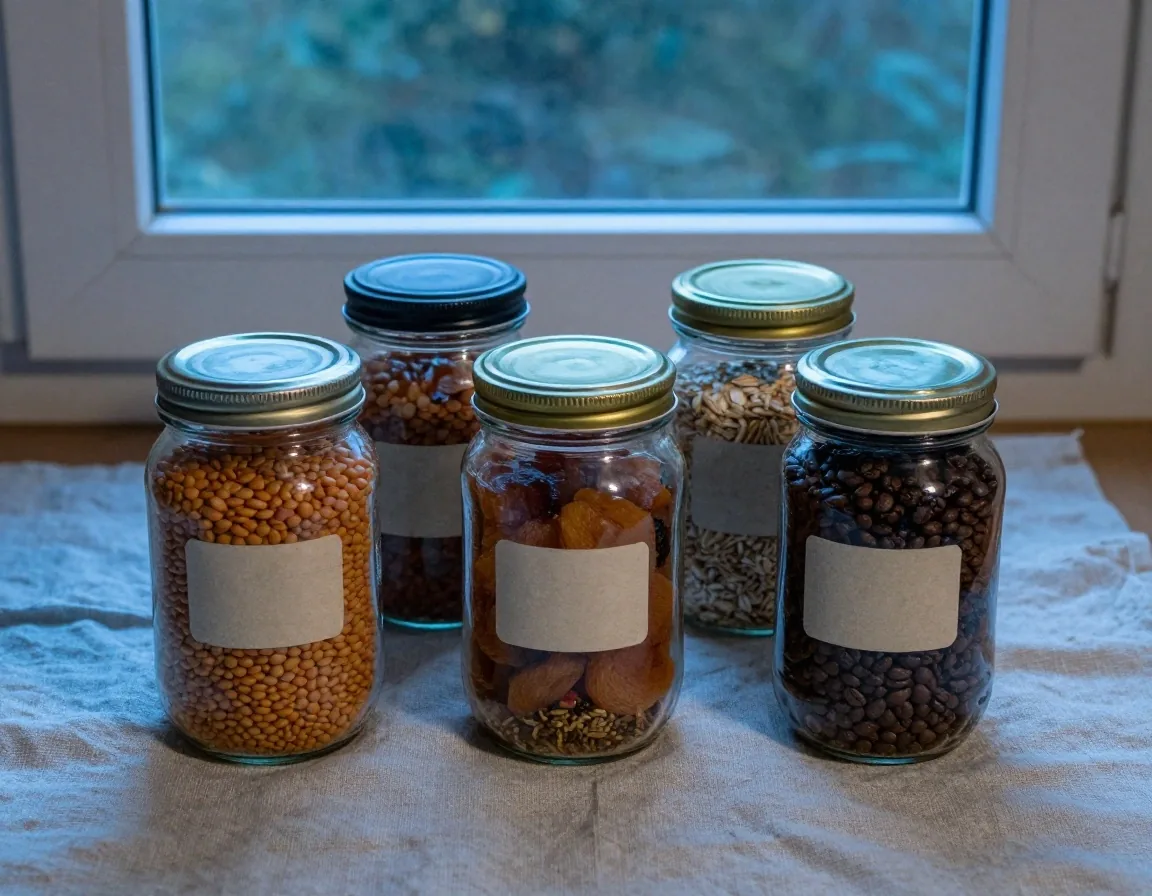
Plastic free food storage does not need a new set. Sauces, jam and coffee jars, washed and de-labelled, take dry goods and leftovers perfectly well. Keep lids matched to jars and they stay in use.
Old clothes are the third common bin filler, and most of them have another use in them. Cotton t-shirts and worn towels make good cleaning cloths once cut down, no sewing needed. Clothes still in wearable condition can go to charity shops, textile banks or a local swap.
Items beyond repair can sometimes become stuffing, pet bedding or rags. Check whether your council collects textiles kerbside, because many do not, and a bag left out anyway becomes waste. The upcycling projects page has beginner ideas that need no machine.
Worth knowing the difference as you sort: upcycling vs recycling is not a ranking. Recycling breaks a material down and makes something new from it; upcycling reuses the item itself, often with no industrial process at all. Both keep things out of landfill, and a repair or a second use usually takes less energy than either.
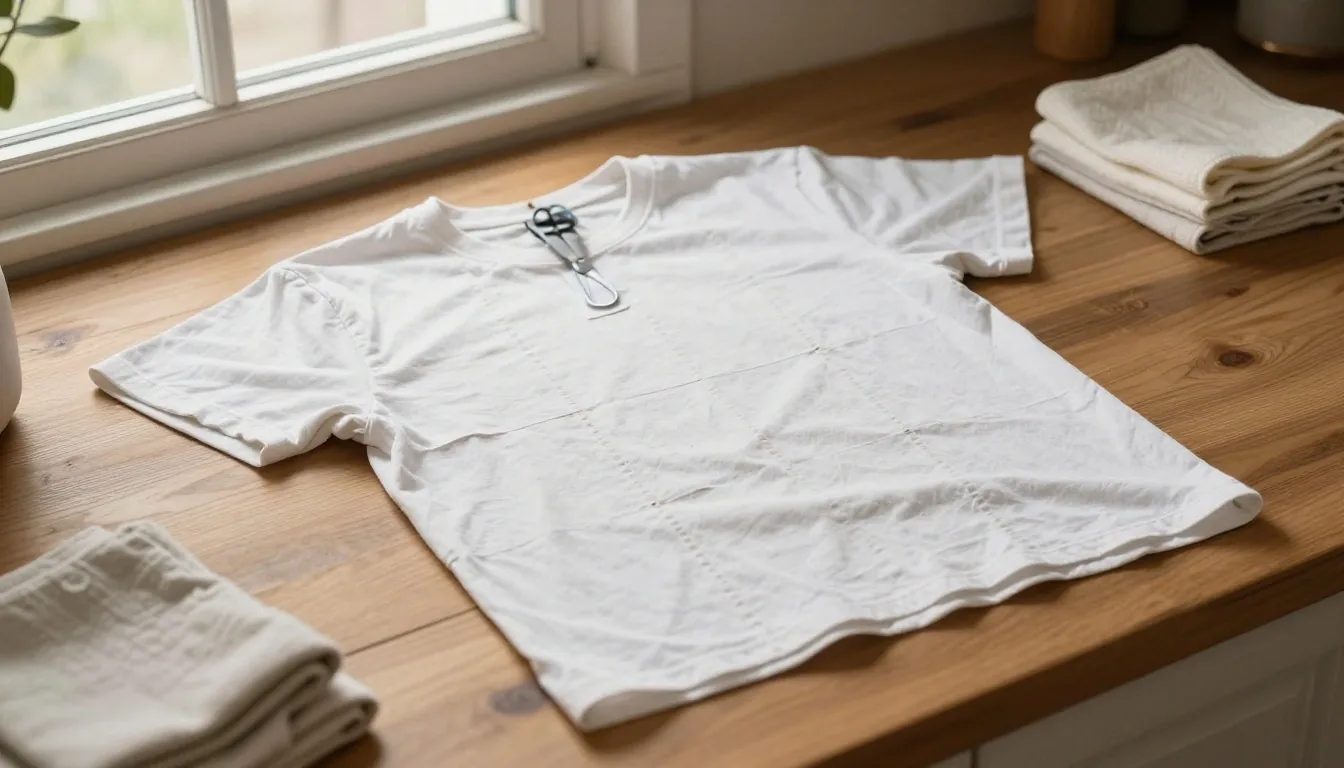
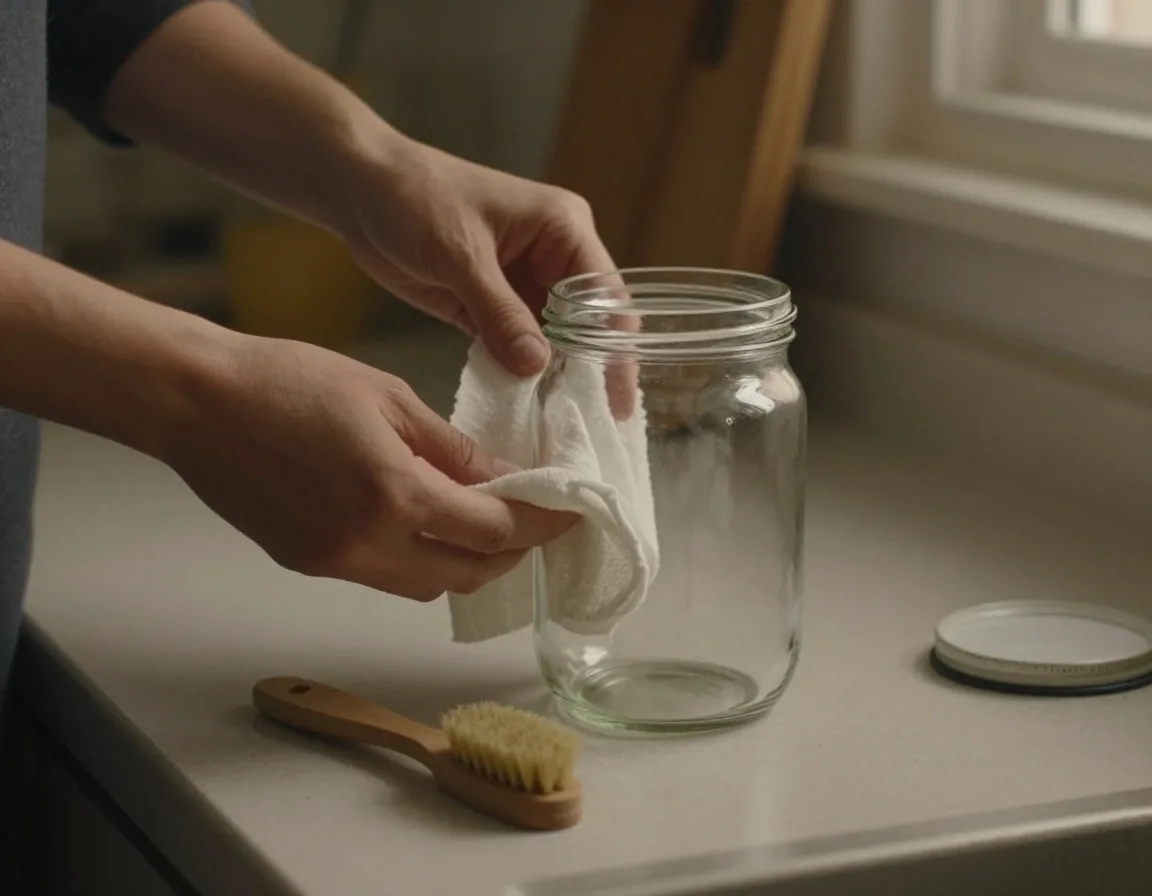
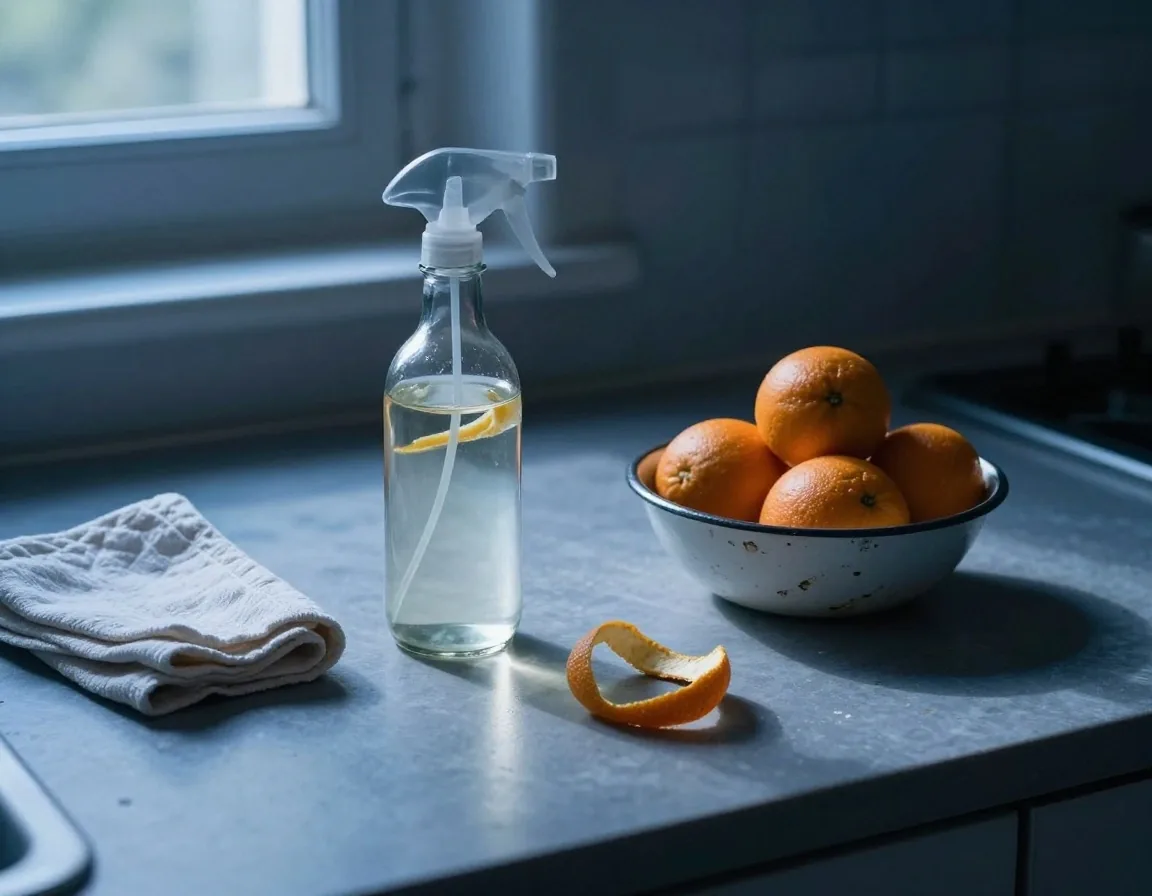
The routines that last are the boring ones: a bag by the door, a caddy on the counter, a jar of vinegar under the sink. Adding one habit a month is plenty. Two habits done every week beat six attempted once.
Writing your two current habits on the fridge works better than a phone reminder, because you see it while your hands are already busy. When one slips, restart it and drop the guilt. Nobody keeps every swap permanently, and a habit you return to still counts.
One container, emptied on bin day. This is the change most households notice immediately, because the bin stops smelling.
Reusable produce bags and two containers for loose food travel with your keys. The habit rides on going out, so it is nearly free to keep.
Pick the drawer you already avoid. Repurpose the jars, bag the textiles for the bank, and let the rest go honestly. One drawer is a finished job.
Refill an old spray bottle with vinegar and water, keep the cloths you cut. This is eco friendly kitchen cleaning with no new kit and no learning curve.
If you get through two of these four in a year, you are ahead of most households that start with a shopping list.
If you share a home, agree on one change everyone can live with before adding another. A caddy with a lid and a clear label on the bin gets far less pushback than a rule about what not to throw out, because it asks for a place to put something rather than a restriction.
Kids usually take to the food waste caddy quicker than adults, and often take over emptying it. Keep the conversation short and practical: where things go, who empties what, and when. Leave the explaining for later, once the routine is already running.
Two practical details head off most friction. Put the caddy where the cooking happens, not in a corner, and keep one honest bin for things nobody can be bothered to sort. A household with one clear rule beats a household with six that nobody follows.
The things beginners ask most often, answered without the shopping list.
No. A starter kit is a useful shorthand, but the first three moves on this page cost nothing: look at your bin, use a container you already own, and take a bag you already have. Buy replacements for things you use up every week, not a set of objects you might use someday.
Not exactly. Plastic free alternatives are one part of low waste living, but the bigger wins for most UK homes are food waste and buying less overall. Cutting plastic where you can is worthwhile; treating it as the only measure tends to miss the heaviest part of the bin.
Then home composting is the practical route if you have any outdoor space, even a small bin on a balcony for vegetable peel and coffee grounds. Without outdoor space, the honest first move is buying less food and planning meals, which reduces waste before it is created. The composting guide explains what can and cannot go in a home bin.
Everything in this guide is reversible. A caddy on the counter, bags by the door and a box for repurposing need no fixtures and can move with you. If your landlord provides bins, work with them rather than around them.
One habit usually settles in within three or four weeks, and the second is easier because the first is already running. Some swaps never stick, and that is useful information: it tells you which one to drop so the rest keep going.
Start with whatever your bin told you. The kitchen swaps, shopping and composting guides take each step further, and you can always tell us what you would like covered next.